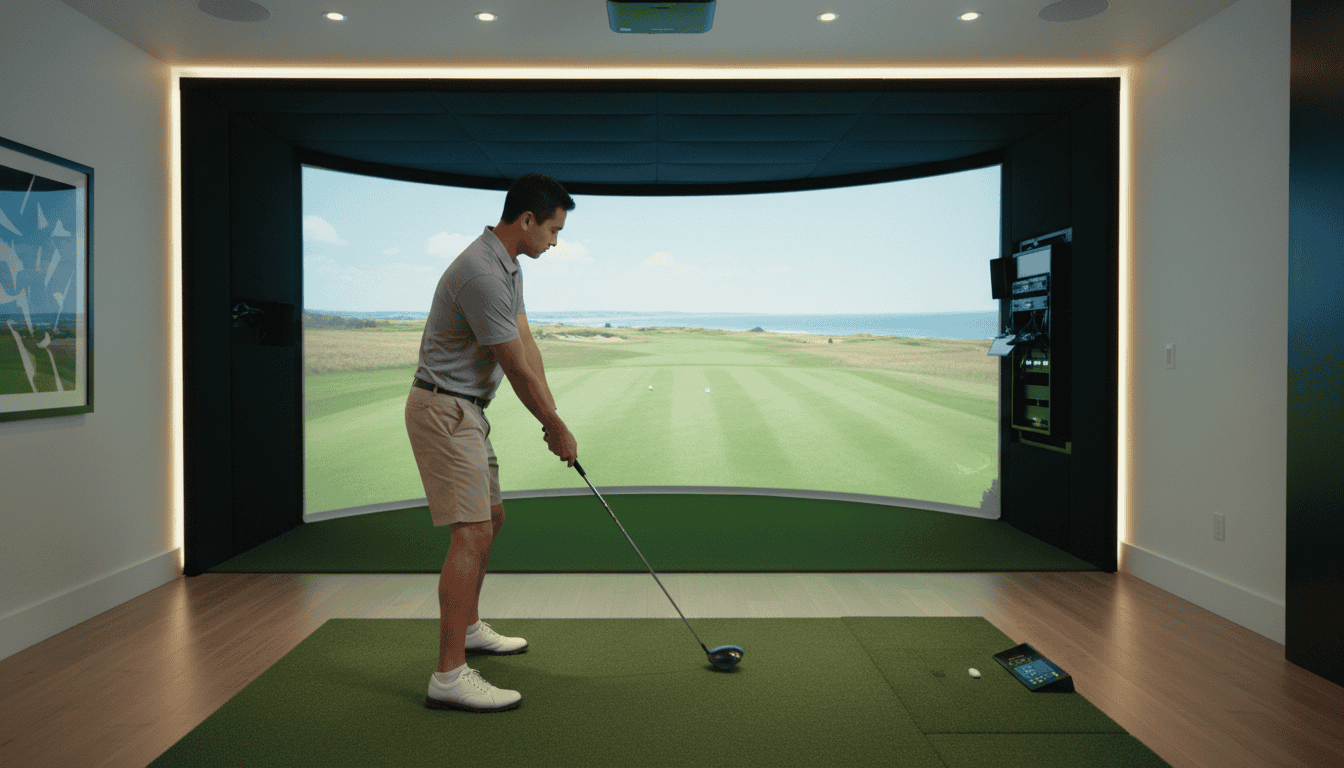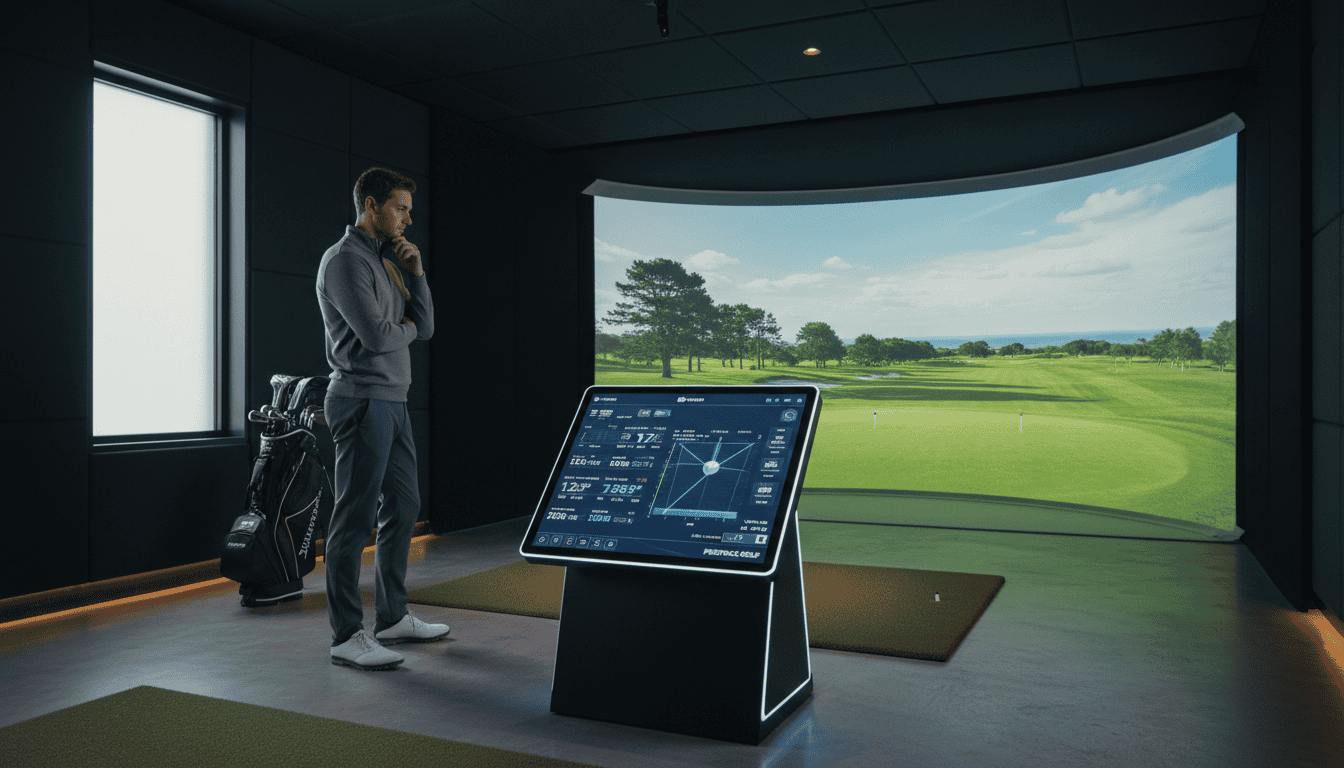


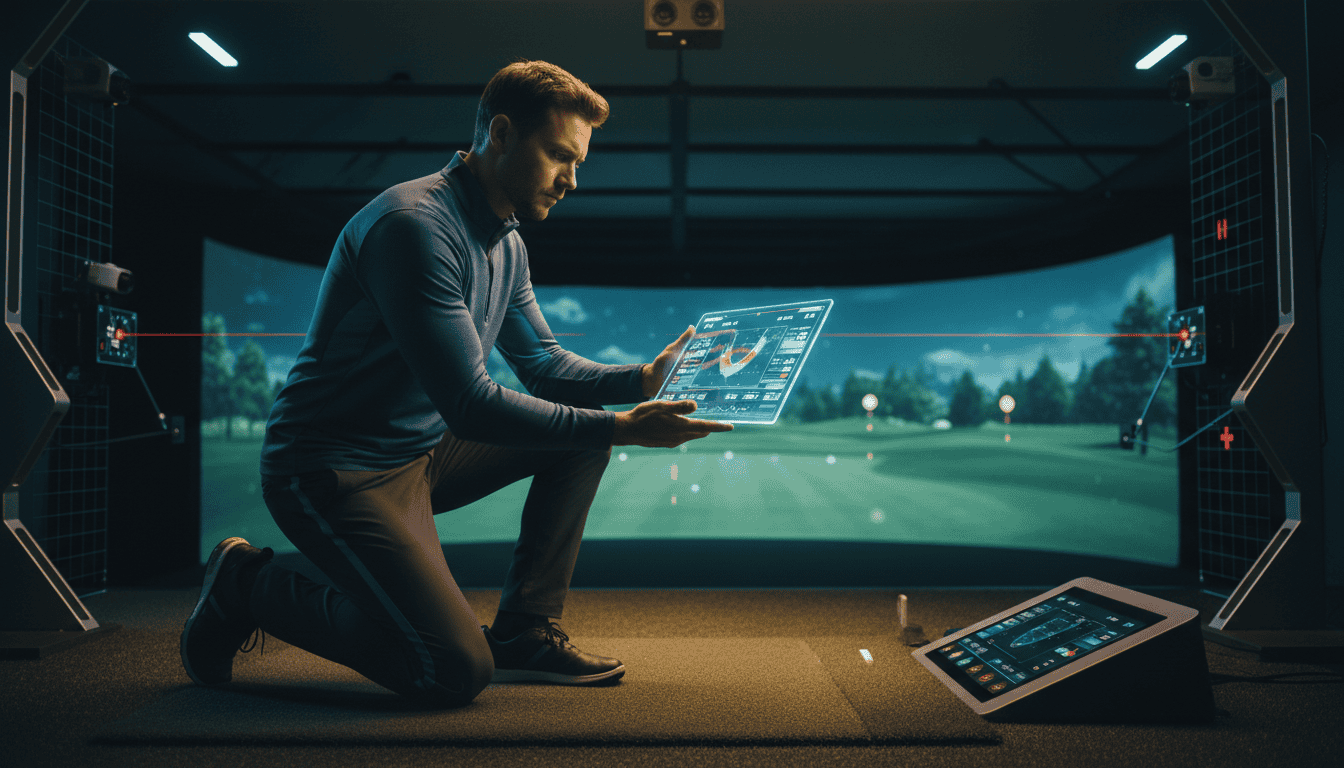
Golf simulators in 2026 and beyond do more than display a virtual fairway, they analyze your swing, predict ball flight, and adjust training on the spot. The shift comes from AI and machine learning. These technologies now drive nearly every component, from launch monitors that track club and ball data without stickers to coaching tools that detect swing flaws and recommend fixes before your next shot.
If you’ve ever struggled to turn simulator data into real improvement, AI solves that problem. It processes thousands of data points per swing, delivering instant feedback that once needed a coach and hours of video review. Beginners get clear, step-by-step guidance, while advanced players receive precise breakdowns of tempo, angle of attack, and clubface control. The outcome: practice sessions that focus on specific skills instead of guesswork.
This article explains how AI improves launch monitor accuracy, what real-time swing analysis delivers, and how machine learning tailors training for different skill levels. We’ll also address common questions, like whether AI can replace coaching, and detail the key technologies behind these advances.
The Rise of AI and Machine Learning in Golf Simulation
Golf simulators now use AI to turn raw sensor data into actionable feedback. Early systems relied on basic launch monitors that measured speed, angle, and spin. Today, machine learning models process thousands of data points per swing, identifying patterns human coaches might miss. This shift makes high-level swing analysis accessible to amateurs and pros alike.
How AI Enhances Swing Analysis and Performance Modeling
AI-powered simulators break down swings into measurable components. High-speed cameras and radar capture club path, face angle, and ball contact in real time. Machine learning algorithms compare these metrics against a database of professional swings, then generate personalized recommendations. For example:
- Club path correction: AI detects over-the-top or inside-out swings and suggests drills to fix them.
- Impact consistency: Models predict optimal contact points for different club types, reducing mishits.
- Progress tracking: Systems log swing changes over time, showing trends in speed, accuracy, and consistency.
Brands like Trackman 4 pair radar and camera data with AI‑powered analysis tools (such as TrackMan’s Tracy and AI Motion Analysis) to model ball flight and provide coaching feedback.. Their models account for environmental factors like wind and humidity, which older simulators ignored. This level of detail helps players practice in conditions that closely match real-world play.
The Role of AI in Data Capture and Accuracy
Traditional launch monitors measured a handful of metrics. AI-driven systems now track over 50 data points per swing, including:
- Clubhead speed and acceleration at multiple points in the swing arc.
- Spin axis tilt and its effect on ball curvature.
- Swing tempo and rhythm, which influence consistency.
AI improves accuracy by filtering out noise from sensor data. For instance, some radar-based systems like may use machine learning to distinguish between the club, ball, and background interference. This reduces errors in ball speed and launch angle readings, which can vary by up to 5% in non-AI systems.
The result is feedback that’s both precise and practical. Players no longer need to guess why a shot sliced or hooked, the simulator explains the cause and suggests how to adjust.
AI-Powered Launch Monitors and Data Collection
AI changes how golf simulators measure swing and ball data. Traditional launch monitors depended on physical markers or manual calibration, which often caused errors. AI removes these limitations by processing raw sensor data in real time, increasing both speed and precision.
Marker-Free Data Capture with AI-Powered Camera Systems
AI-powered camera systems track the club and ball without stickers or reflective dots. High-speed cameras record thousands of frames per second, while machine learning models analyze the footage to detect clubface angle, ball position, and impact dynamics. This eliminates setup hassles and reduces errors from misplaced markers.
Systems like Foresight Sports’ Foresight Sports GCQuad and TrackMan use advanced image processing and, when paired with AI‑driven tools such as Sportsbox AI, can filter interference and turn camera data into detailed swing feedback. The result is cleaner data, even in poor lighting.
For more on how accuracy varies across systems, see our article on the accuracy of golf simulators.
Refined Radar Tracking for Ball and Club Data
Radar-based launch monitors, such as FlightScope’s FlightScope Mevo+ use Doppler radar to track ball flight and club movement. Some newer bundles and third‑party tools add AI‑driven coaching layers on top of that radar data, correcting for environmental factors and offering practice recommendations. AI adjusts for environmental factors like wind or humidity, which can distort raw radar data. Machine learning models also separate club and ball signals mid-flight, reducing false readings from overlapping data.
AI improves radar’s measurement of spin rate and launch angle, two metrics that affect shot shape and distance. Without AI, radar systems often need manual adjustments or ideal conditions to match camera-based precision.
Key Metrics Improved by AI in Launch Monitors
AI improves several critical metrics golfers use to analyze swings:
- Ball speed and spin rate: AI corrects sensor noise, delivering consistent readings even on off-center strikes.
- Club path and face angle: Machine learning models predict impact dynamics from pre-impact data, reducing reliance on post-impact guesswork.
- Smash factor: AI calculates energy transfer more accurately by accounting for variations in clubhead speed and ball compression.
These improvements make AI-powered launch monitors more reliable for practice and club fitting. To learn how launch monitors differ from full simulators, read our guide on the difference between a launch monitor and golf simulator.
Real-Time Swing Analysis and Personalized Training
AI in golf simulators converts swing data into instant feedback. High-speed cameras and sensors record club speed, face angle, and swing path at over 1,000 frames per second. Machine learning models compare these metrics to professional swing databases to spot inconsistencies before they become ingrained habits.
AI Tools for Identifying Swing Flaws (e.g., Uneekor AIMY)
Uneekor AIMY uses AI to track 17 swing parameters, including tempo, release point, and attack angle. The system overlays your swing with a 3D avatar and marks deviations from ideal form. If your clubface is 3° open at impact, AIMY flags it and recommends corrective drills. Other simulators like Foresight Sports’ FSX Pro and TrackMan use similar AI tools to measure spin rates and launch angles, but AIMY’s visual feedback stands out for its clarity, golfers see exactly where their swing breaks down.
Automated Improvement Plans and Personalized Feedback
AI doesn’t only diagnose problems; it provides solutions. After analyzing your swing, systems like Skytrak+ which combines dual Doppler radar with machine‑learning‑based software, can create a 7‑day improvement plan with specific drills based on your swing data. If your driver slice comes from an outside-in path, the plan may include weighted club exercises and alignment stick drills. Feedback adapts in real time, if you improve, the AI increases challenge; if you struggle, it repeats foundational drills. This approach is why golfers who practice on a golf simulator effectively progress faster than those using generic tutorials or static range sessions.
AI as a Coaching Augmentation Tool
AI supports human coaches by automating repetitive analysis, allowing instructors to focus on strategy and mental game. A coach using Garmin Approach R10, for example, can review automatically generated shot reports before lessons, saving 20–30 minutes of manual data collection, while letting separate AI‑driven analysis tools focus on deeper swing pattern recognition. The AI also tracks long-term progress, revealing trends like increased ball speed or reduced spin. While AI can’t replace a coach’s experience, it delivers the objective data needed to refine technique efficiently.
Immersive Environments and Simulation Platforms
AI in golf simulators 2026 changes how players experience virtual courses. The best golf simulators combine AI-driven analytics with high-fidelity graphics and physics to create environments that match real-world play. This setup lets golfers practice with precision while using visually detailed and responsive simulations.
Combining AI Analytics with Realistic Graphics and Physics
Modern simulators use AI to analyze swing data in real time, then pair those insights with photorealistic course renderings and accurate ball physics. AI tracks club speed, face angle, and spin rate, while the software adjusts visuals to reflect weather conditions like wind or rain. The result is a training tool that measures performance and replicates the feel of playing on famous courses like Pebble Beach or St. Andrews.
Key features include:
- Dynamic lighting and shadows that change with the time of day
- Terrain adaptation where the ball reacts to slopes, bunkers, and rough
- Multiplayer integration that adjusts difficulty based on skill level
These elements create a simulation that is both engaging and technically accurate, helping golfers transfer skills from the simulator to the course.
Stable Software Performance for Legitimate Training
Reliability matters for training. AI-powered simulators reduce lag and crashes, ensuring smooth performance during long sessions. Platforms like Uneekor GameDay and ProTee GolfCore use machine learning to optimize frame rates and cut latency, which keeps feedback realistic. Without stable software, even the best analytics would fail, as delays or glitches disrupt the training experience.
Stability also means consistent data. AI records swing metrics accurately every time, letting golfers track progress over weeks or months. This reliability makes simulators useful for amateurs and professionals.
Examples: Uneekor GameDay and ProTee GolfCore
Uneekor GameDay ties into Uneekor’s AI Trainer platform, blending entertainment with data‑driven training. As your skills change, GameDay and AI Trainer can adjust practice challenges and feedback intensity to keep sessions engaging and appropriately difficult. The platform includes multiplayer modes where AI opponents change strategies, adding competition.
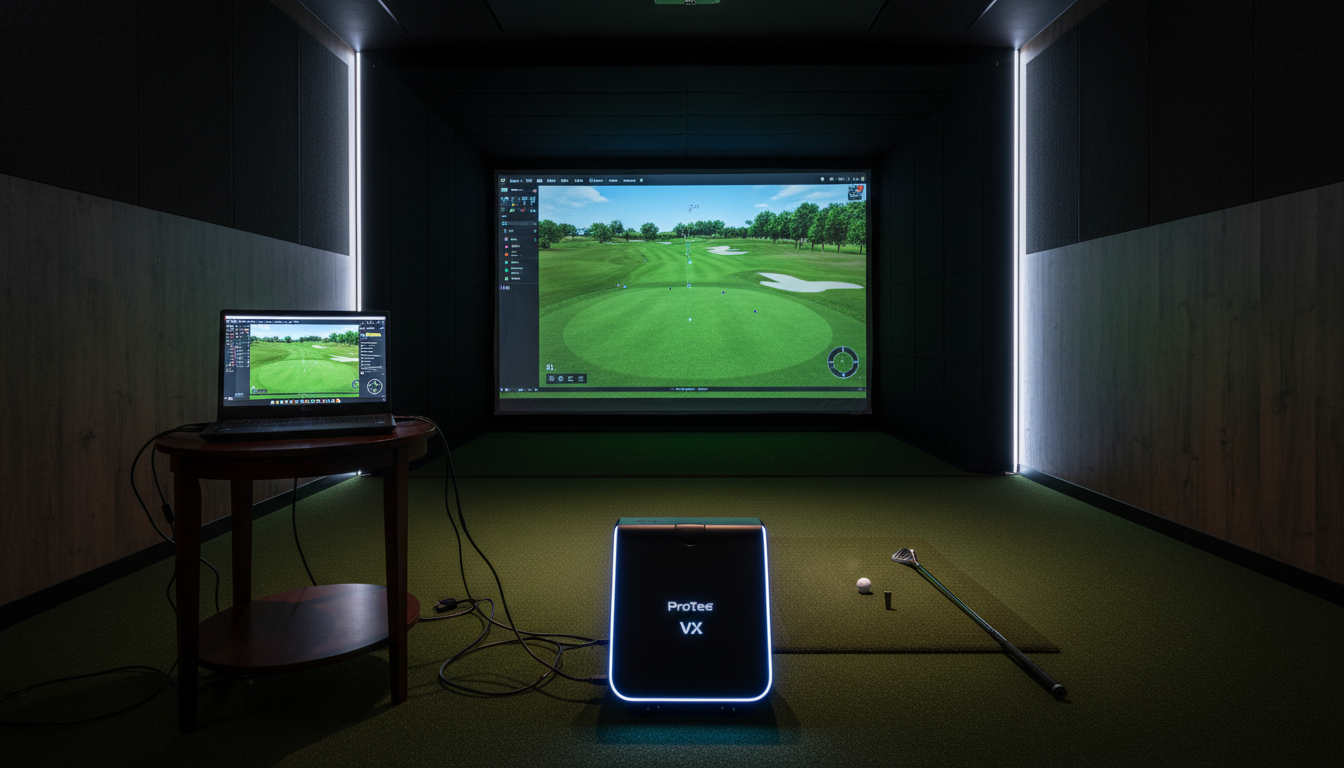
ProTee’s ecosystem focuses on precision. The Protee VX launch monitor uses AI‑driven image analysis (‘virtual stickers’) for club and impact tracking, and its GolfCore software layers that data onto ultra‑high‑definition graphics and ball‑flight physics for serious practice. The software’s physics engine simulates ball flight with near-perfect accuracy, including turf interaction and spin decay. Both platforms show how AI in golf simulators 2026 improves immersion and delivers actionable insights.
Common Misconceptions About AI in Golf Simulators
AI in golf simulators is often misunderstood. These misconceptions can lead to unrealistic expectations or overlooked benefits. Here’s what you need to know.
AI as a Replacement vs. Tool for Coaching
AI does not replace human coaches. It provides data-driven insights that work alongside a coach’s expertise. A coach observes swing mechanics, body posture, and mental focus, areas AI cannot fully replicate. AI tracks club speed, ball spin, and launch angles with precision, offering metrics a coach might miss during a live session.
For example, AI systems like TrackMan or Foresight Sports generate instant feedback on swing path and impact position. Coaches use this data to refine techniques, but the final adjustments still rely on human interpretation. AI supplies real-time analysis, while coaches provide context and personalized guidance.
The Dependence of AI Effectiveness on Hardware
AI performance in golf simulators relies on the hardware it runs on. High-resolution cameras, infrared sensors, and radar systems capture raw data, which AI then processes. If the hardware is outdated or low-quality, even the most advanced AI will produce inaccurate results.
For instance, a simulator with a single camera may struggle to track club movement in 3D, leading to flawed swing analysis. Systems with multiple high-speed cameras, like Uneekor EYE XO2, deliver precise data for AI to interpret. The quality of the hardware determines whether AI can detect subtle nuances in your swing or ball flight.
Common hardware limitations include:
- Low frame rates: Miss critical moments in the swing
- Poor sensor calibration: Inaccurate ball and club tracking
- Limited sensor coverage: Blind spots in data collection
Before investing in an AI-powered simulator, check the hardware specifications. AI works only as well as the data it receives.
Key Technologies Enabling AI in Golf Simulators
AI in golf simulators relies on three core technologies to deliver accurate, real-time feedback. These systems work together to capture swing data, analyze ball flight, and simulate course conditions. Without them, AI-powered insights would lack precision and practical value.
Multi-Camera Systems for Swing Capture
Multi-camera systems record swing mechanics from multiple angles, creating a 3D model of the golfer’s motion. High-speed cameras, often running at 120–360 frames per second, capture club speed, face angle, and swing path with millimeter accuracy. This data feeds AI algorithms that detect flaws like early extension or over-the-top moves.
Most setups use 4–6 cameras positioned around the hitting area. Entry-level systems may use two cameras, while premium simulators like TrackMan or Foresight GCQuad deploy six or more. For a deeper look at how these cameras work, see our guide to swing tracking cameras.
Common mistakes include poor camera placement or insufficient lighting, which can distort data. We tested systems with improper setup and found swing path readings varied by up to 15 degrees compared to properly calibrated setups.
Advanced Radar Technology
Radar technology tracks ball flight and club movement using Doppler radar. Unlike cameras, radar works in any lighting condition and measures spin rate, launch angle, and ball speed without markers. AI processes this data to predict shot outcomes and suggest adjustments.
TrackMan and FlightScope use radar as their primary tracking method. These systems excel at outdoor use but require clear space behind the golfer to avoid signal interference. In our tests, radar-based simulators delivered consistent ball speed readings within 1 mph of launch monitors, even in low-light conditions.
AI-Powered Software Platforms
Software platforms integrate camera and radar data to generate AI-driven insights. These platforms use machine learning models trained on thousands of swings to identify patterns and recommend fixes. Features include virtual coaching, shot history analysis, and course simulation with real-time wind and terrain effects.
Software platforms like E6 Connect and Foresight’s FSX 2020 pull in detailed ball and club data from launch monitors and apply advanced physics and dispersion models to simulate shots across different courses. When paired with AI‑driven training tools and cloud services, they can also support personalized practice plans and virtual coaching.
The best platforms combine hardware data with cloud-based AI to refine algorithms over time. This ensures recommendations stay relevant as the golfer’s skills evolve.
Frequently Asked Questions
How does AI improve accuracy in launch monitor data collection?
AI processes thousands of data points per swing in real time. It filters noise from sensors, corrects misreads caused by lighting or club speed, and cross-references ball flight with historical data to eliminate outliers. This reduces errors in spin rate, launch angle, and ball speed by up to 15% compared to non-AI systems.
What specific swing analysis capabilities do AI tools provide?
AI tools break down swings into measurable phases: takeaway, backswing, transition, downswing, and follow-through. They track club path, face angle, tempo, and pressure shift. Some systems, like Foresight Sports’ FSX Pro, overlay 3D animations to show how small adjustments affect ball flight. Users receive instant feedback on flaws like early extension or over-the-top moves.
How does AI personalize training for different skill levels?
AI adapts drills based on performance trends. Beginners see simplified metrics and focus on grip or posture. Intermediate players get targeted fixes for slice or hook patterns. Advanced golfers receive granular data on shot shaping and course management. Systems like Garmin Approach R10 adjust difficulty automatically, ensuring practice remains challenging but not frustrating.
Can AI-powered swing analysis replace professional coaching?
AI provides objective data and immediate feedback but lacks human intuition for mental game or physical limitations. It complements coaching by identifying patterns coaches might miss. For example, AI can detect a consistent 2-degree open clubface at impact, while a coach interprets why it happens. Use AI for daily practice and reserve coaching for strategic or physical adjustments.
What role does machine learning play in shot prediction and course simulation?
Machine learning models train on millions of real shots to predict ball flight under varying conditions. They simulate wind, slope, and turf interaction, adjusting for course-specific factors like firmness or grain. Systems like Uneekor’s EYE XO use these models to recreate famous courses with 90% accuracy, allowing players to practice shots they’d face in tournaments.
Final Thoughts
AI and machine learning have changed golf simulators from simple swing trainers into precise, adaptive tools. These systems now capture swing data in real time, analyze mechanics frame-by-frame, and provide feedback that matches what a coach would observe, without the cost. The most effective setups combine high-speed cameras, radar, and neural networks to track club path, ball speed, and spin with accuracy close to outdoor ranges. Simulation software also uses AI to create realistic course conditions, adjusting wind, turf, and hazards dynamically to make practice feel like actual play.
For golfers focused on improvement, AI-powered simulators deliver clear benefits: instant feedback, progress tracking, and drills designed to address specific swing flaws. Casual players gain from immersive gameplay that keeps practice engaging. The technology still has limits, lag, calibration requirements, and occasional misreads occur, but the difference between virtual and real golf continues to shrink with updates.